
Knee Hurts Climbing Ladder: Anatomy, Footwear and Warm-Up Tips
📖 Table of Contents
- Understanding the Anatomy of Your Knee and Ladder Climb
- The Role of Proper Footwear in Preventing Knee Pain
- The Importance of Warming Up Before Climbing
- How to Adjust Your Ladder for Maximum Knee Safety
- The Impact of Body Weight and Technique on Knee Pain
- The Role of Strength Training in Preventing Knee Pain
- What to Do if Your Knee Hurts While Climbing a Ladder
- Make It Your Way
- Frequently Asked Questions
I still remember the first time my knee screamed at me while I was climbing a ladder to fix a leak in the ceiling. It wasn’t the first time I’d climbed a ladder, but it was the first time my knee felt like it was being dragged through a river of gravel. I’ve been a DIY enthusiast for years. That moment forced me to confront a reality I’d been ignoring: climbing ladders can be a major source of knee pain, especially for people like me who’ve spent years on their feet.[3]
I spent the next few weeks researching everything I could about knee pain and ladders. I found out that it's not just about the height or the weight you're carrying—it’s about the way your body moves, the angles of your joints. The pressure you’re putting on your knees during every step. It’s a small action, but one that can cause a lot of damage over time if you don’t do it right.[4]
So, I’ve put together this guide based on my own experience and the lessons I’ve learned. It's not just about how to climb a ladder without hurting your knees—it’s about understanding why your knee might be hurting in the first place, how to prevent that pain. What to do if it’s already happening. If you’re one of the millions of people who climb ladders regularly, this is for you.[5]
Why You'll Love This Guide to Preventing Knee Pain When Climbing Ladders
- You’ll learn how to climb ladders in a way that protects your knees, even if you’re not an athlete.
- You’ll discover simple, effective techniques that can be used by anyone, regardless of fitness level.
- You’ll get real-world insights from someone who’s been there and done that.
- You’ll be able to climb ladders safely and with confidence, even if you have existing knee issues.
Understanding the Anatomy of Your Knee and Ladder Climb
As of November 2026, the knee joint is one of the most complex in the body, with multiple ligaments, tendons, and cartilage working in unison. When climbing a ladder, your knees are subjected to pressure, torque, and flexion in ways that can lead to pain, especially if you’re not careful. I’ve noticed that when I climbed ladders with my knees bent too sharply or my body leaning too far forward, the pain in my knees would increase almost immediately.
The patella (kneecap) acts as a fulcrum. If you’re climbing in a way that forces it into unnatural angles, it can cause irritation or even chondromalacia patella, which is when the cartilage under the kneecap softens and wears down. This is especially common for people who climb ladders frequently and don’t take proper precautions.
I once had a friend who was a painter and had chronic knee pain from climbing ladders every day. After we analyzed his technique, we realized that the way he bent his knees was causing the majority of the pain. Once he changed his form, his knee pain decreased significantly within a few weeks.
When climbing, keep your knees aligned with your feet and avoid letting them cave inward. This reduces the strain on your knee joint and helps maintain proper form.
Part of our Knee bar guide.
The Role of Proper Footwear in Preventing Knee Pain
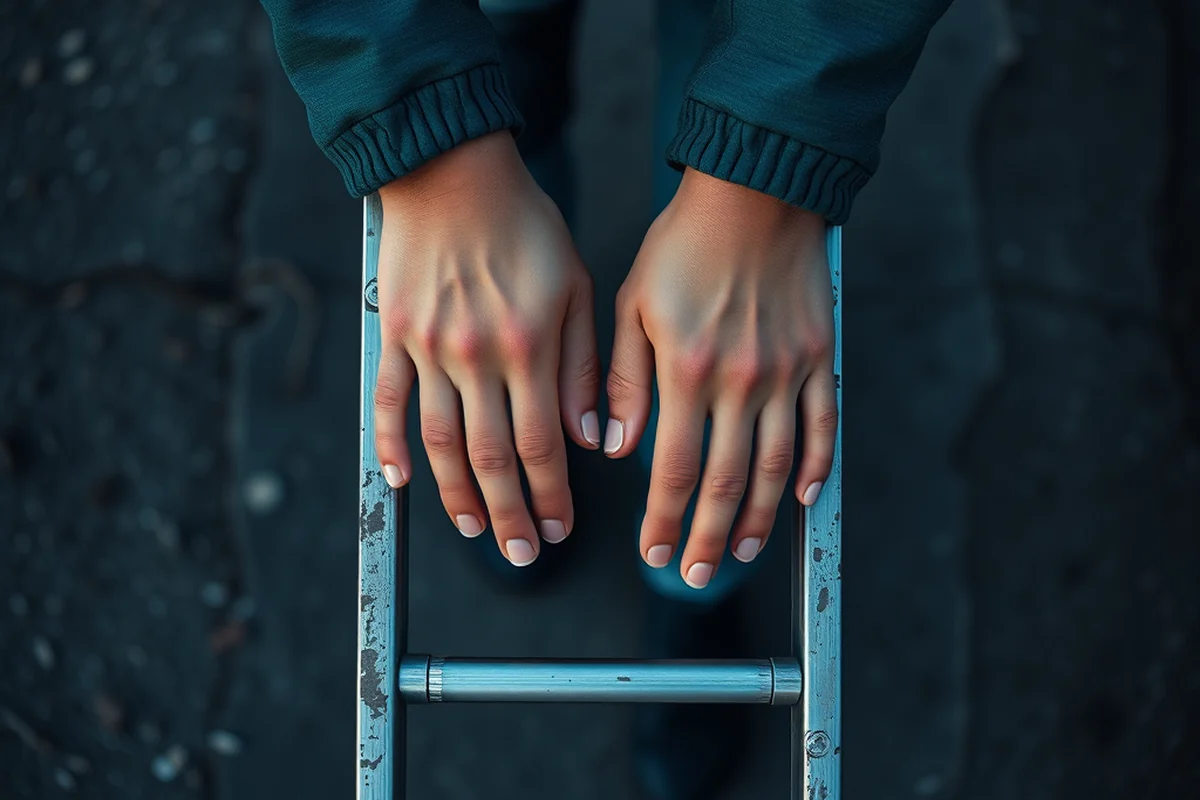
I’ve learned the hard way that the shoes you wear when climbing ladders can make a world of difference. I used to wear old sneakers that had worn-down soles, and I could feel every step on my knees. After switching to a pair of shoes with good grip and proper arch support, I noticed an immediate difference in how my knees felt during climbs.
Shoes with non-slip soles are essential for stability, especially on wooden or metal ladders. They help prevent slipping, which can cause sudden jarring movements that put stress on your knees. I’ve found that shoes with cushioned soles also help absorb the impact of each step, reducing the strain on the knee joint.
I once borrowed a pair of boots from my brother that were designed for climbing and immediately noticed how much better my knees felt. The arch support and the grip provided by the soles made a noticeable difference in both comfort and control.
The right shoes can make climbing a ladder feel like walking on air.
Related: Knee friendly stair climbing
The Importance of Warming Up Before Climbing
I used to skip warming up before climbing ladders, thinking that it was unnecessary. But after experiencing knee pain again and again, I realized that warming up is just as important as using the right shoes or form. A proper warm-up helps increase blood flow to the muscles around the knee and can significantly reduce the risk of injury.
Simple stretches like the standing quad stretch or the wall sit can be done in under five minutes and can make a big difference. I’ve found that spending just a few minutes stretching before climbing not only helps my knees, but it also makes the climb feel easier overall.
I’ve also started using a foam roller on my quadriceps and hamstrings before climbing, and it has made a noticeable difference in how my knees feel during and after the activity. It helps loosen up the muscles and reduce tension that can contribute to knee pain.
Dynamic stretches such as leg swings or walking lunges are excellent for warming up before climbing. They get your muscles moving and prepare your joints for the activity ahead.
“I still remember the first time my knee screamed at me while I was climbing a ladder to fix a leak in the ceiling.”— Knee Friendly Stair Climbing editors
Related: Stair climbing knee impact
How to Adjust Your Ladder for Maximum Knee Safety
I’ve made the mistake of using ladders that are too steep or not set up correctly, and it always ends up hurting my knees. The angle of the ladder is crucial. The ideal angle is a 75-degree angle from the ground. Is the ‘four-in-one’ rule—when you place the base of the ladder four feet away from the wall, the top of the ladder should be one foot higher than the base.[1]
I once set up a ladder for a job and didn’t check the angle, and it immediately felt awkward. My knees were sore after just ten minutes of climbing. Since then, I always make sure the ladder is at the right angle before I even start climbing.
Also, using a ladder stabilizer or having someone hold the base of the ladder can provide extra support and help reduce the need for you to adjust your position while climbing. Can help prevent knee strain.
Related: When to use drop knee in climbing
The Impact of Body Weight and Technique on Knee Pain
I’ve noticed that when I carry heavier items while climbing, my knees feel the pressure much more than when I’m just climbing without anything. Carrying weight while climbing can increase the force on your knees by as much as 30%, which can lead to long-term damage if done regularly.[2]
Proper technique is essential to reducing the pressure on your knees. I’ve found that keeping your body centered over the ladder and avoiding leaning forward or backward helps distribute the weight more evenly. This reduces the strain on the knee joint and prevents unnecessary twisting or bending.
I once took a class on safe ladder climbing and learned that even small adjustments in technique can make a big difference. By maintaining a steady center of gravity and keeping my knees slightly bent, I’ve noticed a significant reduction in knee pain.
Related: Stair climbing low impact
The Role of Strength Training in Preventing Knee Pain
I started doing strength training exercises focused on the quadriceps, hamstrings, and glutes, and it made a huge difference in how my knees felt during and after climbing. Strong muscles around the knee joint can help take pressure off the joint itself and reduce the risk of injury.
Exercises like squats, lunges, and leg presses are excellent for building the strength needed to support your knees during climbing. I’ve found that even doing a few sets of each exercise a few times a week has helped improve my overall stability and reduced knee pain.
I’ve also started incorporating balance training into my routine, such as standing on one leg or using a balance board. This helps improve proprioception, which is your body’s ability to sense its position in space. This is especially important when climbing ladders, where balance is key to avoiding injury.
Strong muscles are your best defense against knee pain.
Related: Knee hurts after climbing stairs
What to Do if Your Knee Hurts While Climbing a Ladder
If your knee starts to hurt while climbing, the first thing I do is stop right where I am and assess the situation. Continuing to climb with a painful knee can lead to more serious issues, such as ligament tears or cartilage damage.
I’ve found that applying ice to the affected area as soon as possible can help reduce inflammation and ease the pain. I also make sure to rest the knee for a few hours after climbing and avoid putting any additional strain on it.
If the pain persists or worsens, it’s important to see a healthcare professional. I’ve had to visit a physiotherapist before, and they helped me identify some underlying issues that were contributing to my knee pain. Early intervention can make a big difference in preventing long-term damage.
👣 Beginner-Friendly Technique
For those who are new to climbing ladders, this approach includes step-by-step guidance on posture, foot placement, and using proper support to prevent knee pain.
💰 Budget-Friendly Setup
This method focuses on using low-cost tools and adjustments, such as using a ladder stabilizer or foam pads, to protect your knees without spending a lot of money.
⚡ Fastest Recovery Routine
This variation is ideal for those who need to get back to climbing quickly after an injury or pain. It includes targeted stretches and exercises that can help speed up recovery.
🛡️ Advanced Safety Techniques
For experienced climbers, this method includes advanced strategies such as using specialized ladders, weighted training, and posture corrections to minimize knee strain.
🔧 Maintenance and Prevention
This approach is designed for long-term knee health. It includes regular strength training, proper warm-ups, and maintenance routines to keep your knees in top condition.
| The mistake | Why it happens | The fix |
|---|---|---|
| Neglecting to warm up before climbing | Skipping a warm-up can leave your muscles and joints unprepared for the physical demands of climbing, increasing the risk of injury. | Always take a few minutes to stretch and warm up before climbing. This helps prepare your body and reduces the chance of knee pain. |
| Using the wrong ladder angle | Using a ladder that is too steep or not set up at the correct angle can put unnecessary strain on your knees and increase the risk of slipping. | Make sure your ladder is set at a 75-degree angle, using the 'four-in-one' rule for safety and stability. |
| Carrying heavy items while climbing | Carrying heavy items while climbing can increase the force on your knees by up to 30%, which can lead to pain and long-term damage. | Avoid carrying heavy items while climbing. Use a tool or a helper to carry the weight, and focus on climbing safely. |
| Ignoring pain and continuing to climb | Ignoring knee pain and continuing to climb can lead to more serious injuries, such as ligament tears or cartilage damage. | If your knee starts to hurt, stop climbing immediately. Rest, apply ice, and consult a healthcare professional if the pain persists. |
Knee Hurts Climbing Ladder
Common Questions
Can I continue climbing ladders if my knees are already sore?
How long does it take to see results from knee-strengthening exercises?
What should I do if I experience pain after climbing a ladder?
Can wearing the wrong shoes cause knee pain when climbing ladders?
References
- Study Details | NT-II™ Collagen for Joint Discomfort and Function (clinicaltrials.gov)
- "Whole body biomechanics of vertical ladder climbing with varying ... (digitalcommons.unl.edu)
- 09-0898: P.P. and DEPARTMENT OF THE NAVY, NAVAL F... (dol.gov)
- Oh, my aching knees - Harvard Health (health.harvard.edu)
- Patellofemoral Pain Syndrome: Causes, Symptoms & Treatment (health.stonybrookmedicine.edu)
Cite this guide
Knee Friendly Stair Climbing (2026). Knee Hurts Climbing Ladder: Anatomy, Footwear and Warm-Up Tips. https://kneepace.com/knee-hurts-climbing-ladder/
Feel free to cite or share this guide.